 listicle
Drug Test Safe Energy Supplements for Work: What to Take
Table of Contents
- Why Some Energy Supplements Cause False Positives
- Supplements That Cause False Positive Drug Tests
- How Drug Tests Detect Substances and Where Supplements Fit
- Best Energy Supplements for 12 Hour Shifts That Are Test-Safe
- How to Check Supplement Ingredients for Drug Test Safety
- Common Mistakes That Put Your Job at Risk
- Verdict: Building a Test-Safe Energy Stack for Work
- Frequently Asked Questions
Last Updated: September 7, 2026
Why Some Energy Supplements Cause False Positives
The fear of a false positive on a drug screening keeps many hardworking people from using any supplement at all. A false positive happens when a compound in your supplement reacts with the test's antibodies in a way that mimics an illegal drug, a phenomenon toxicologists call cross-reactivity (PubMed). This is a real concern for workers in safety-sensitive roles, and it's why understanding what is actually in your pre-workout or energy powder matters more than the marketing on the front of the jar.
Workplace drug testing typically uses immunoassay screens, which are designed to be sensitive rather than specific. Because they cast a wide net, certain legal dietary ingredients can trigger a positive result that a confirmatory test, usually GC-MS, would later clear. However, that confirmation takes time, and in many workplaces, you are sent home or removed from the schedule while the lab sorts it out. This guide explains which ingredients pose a risk and how to build a drug test safe energy stack that keeps you working.
Supplements That Cause False Positive Drug Tests
Most standard energy supplements are not the problem. The trouble starts when manufacturers add compounds that are chemically similar to controlled substances or that are simply banned by workplace policies. We need to separate the ingredients that cause lab cross-reactivity from those that violate a company's zero-tolerance list, since both will end your shift early.
Stimulants and Weight Loss Compounds to Avoid
The highest-risk category is stimulants, particularly those sold as "DMAA alternatives." Compounds like octodrine and DMHA are often added to pre-workouts for intense focus, but they are structurally related to amphetamines. While a routine urinalysis may not flag them, many employers use expanded panels that can detect these specific stimulants, and some are actually prohibited by the World Anti-Doping Agency.
Weight loss supplements carry their own risks. Many thermogenic formulas rely on synephrine, which comes from bitter orange and can cause a false positive for amphetamines in some screening assays (peer-reviewed research). The safer approach is to avoid any product with a "proprietary blend" that hides its stimulant doses, since you cannot verify what you are actually consuming.
Hemp-Derived Ingredients and Cross-Reactivity Risks
The rise of hemp-derived wellness products has created the biggest headache for workers subject to drug testing. Even products labeled as hemp-derived and containing zero THC can be problematic. Many broad-spectrum extracts are processed in facilities that also handle full-spectrum material, risking trace contamination that accumulates in your system over time.
More concerning is the cross-reactivity of certain hemp compounds. Some metabolites from legal hemp derivatives can bind to the same antibodies used in cannabis screening tests. If you work in an industry with strict protocols, the only completely safe choice is to avoid hemp-derived ingredients entirely and stick to clearly labeled, single-purpose supplements.
How Drug Tests Detect Substances and Where Supplements Fit
Standardized testing in the workplace usually follows a two-step process: an initial immunoassay screen followed by a confirmatory test. The initial screen is where false positives occur, as it relies on antibodies that bind to a class of drugs rather than a single molecule. This is why the specific chemical structure of what you ingest matters so much.
The confirmatory test, typically gas chromatography-mass spectrometry (GC-MS), is highly accurate and will not confuse a legal supplement ingredient with an illegal drug. The practical problem is that you might not get the chance to take that confirmatory test if your employer's policy dictates immediate suspension pending review. Understanding that the initial screening is the point of failure helps you choose products with simple, transparent formulas that are less likely to interact with the assay.
The Critical Difference: Federal vs. Private Employer Panels
Most general articles on drug testing stop at the two-step process. But for workers, the most important detail is which panel your employer uses, because that determines your actual risk profile. There is a massive difference between a Department of Transportation (DOT) regulated test and a private employer's non-regulated test.
DOT and Federal Panels (e.g., HHS Mandatory Guidelines): If you are in a safety-sensitive role like trucking, aviation, or operating heavy machinery, your testing is governed by federal rules. The standard DOT-5 panel tests for five specific drug classes: marijuana (THC), cocaine, opiates (codeine/morphine), amphetamines/methamphetamines, and PCP (transportation.gov). This panel is highly standardized and does not screen for synthetic stimulants like DMAA or DMHA, nor does it typically flag common supplement ingredients like synephrine. Your primary risk under a DOT panel is THC contamination from hemp-derived products, not a false positive from a pre-workout.
Private Employer Expanded Panels: Private companies that are not federally mandated often use expanded panels, sometimes testing for 10, 12, or even 15 different substances. These expanded panels frequently include synthetic opioids, benzodiazepines, and, critically for supplement users, barbiturates and specific stimulants. If your employer uses an expanded panel, a supplement containing a novel stimulant (like octodrine) or a compound structurally similar to an amphetamine (like DMHA) could trigger a screen. This is why you must read your employee handbook carefully: the risk is not just the science of the test, but the specific policy of your employer.
Where Supplements Fit in the Screening Process
Given these two different testing realities, your supplement strategy should be informed by your industry. A commercial truck driver on a DOT panel has a different risk calculus than a warehouse worker for a private company that uses a 12-panel test.
For DOT-covered workers, the focus should be almost entirely on avoiding any product with hemp or cannabis derivatives, as THC metabolites are the most common cause of positives. For private-sector workers, the focus should be on label transparency and avoiding proprietary blends that could hide unlisted stimulants. In both cases, the confirmatory test (GC-MS) is your safety net, but you want to avoid the administrative headache and lost wages of a 'presumptive positive' in the first place.
Best Energy Supplements for 12 Hour Shifts That Are Test-Safe
For workers grinding through double shifts, the goal is clean energy without the crash or the risk. The best options focus on ingredients with long safety histories and no structural similarity to controlled substances. You want caffeine for alertness, electrolytes for hydration, and amino acids for recovery, all without the "kitchen sink" blends that invite problems.
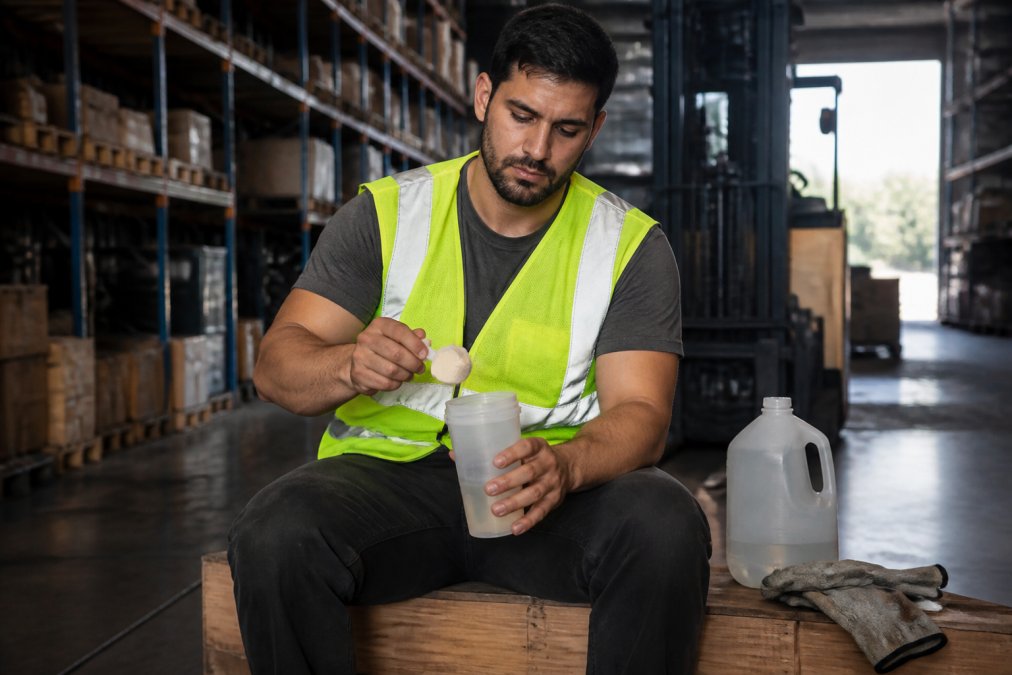
Caffeine-Based Pre-Workout for Sustained Focus
Caffeine anhydrous is the gold standard for stimulant energy because it is completely unrelated to amphetamines and will not cause a false positive. A moderate dose, around 200 mg per serving, provides the sustained focus needed for a 12 hour shift without the jitters associated with higher doses. The best formulations pair this with L-Citrulline and creatine to support blood flow and muscular endurance, which helps when you are on your feet or lifting for hours.
Look for a product that lists the exact caffeine content and avoids "focus blends" that might hide undisclosed stimulants. XGRITX High Octane Pre-Workout Powder delivers 200 mg of caffeine anhydrous alongside 2,000 mg of L-Citrulline and creatine monohydrate, with every ingredient fully disclosed on the label. There are no proprietary blends here, so you know exactly what you are putting in your body before a shift.


Hydration and Electrolyte Support for Physical Work
Dehydration is a silent killer of productivity on the job site. When you lose fluids through sweat, your cognitive function drops and your risk of injury climbs. An electrolyte formula that includes sodium, potassium, and magnesium helps maintain fluid balance and prevents the muscle cramps that end shifts early.
These hydration mixes carry virtually no risk of triggering a drug test because they contain only vitamins and minerals. A product like XGRITX Hydration Formula provides 500 mg of potassium and 140 mg of magnesium per serving, which supports muscle function during repetitive physical labor. This is the layer of your stack that keeps you safe in extreme heat and during long rotations.

Creatine and Protein for Recovery Without Test Risk
Creatine monohydrate is one of the most studied supplements in sports nutrition and has never been shown to interfere with drug screenings. It supports the phosphocreatine system, helping you produce more force during heavy lifting and recover faster between bouts of exertion. For workers who do repeated heavy lifting, it is a valuable addition to the daily routine.
A single-ingredient creatine product is the safest possible choice because there is nothing else in the formula to cause an interaction. XGRITX Horsepower Creatine Monohydrate provides 5 g of pure creatine monohydrate per serving with no fillers or artificial stimulants. Pairing this with a whey protein shake after your shift supports muscle repair, and standard whey protein is not a concern for drug testing.
How to Check Supplement Ingredients for Drug Test Safety
Reading a supplement label correctly is the single most important skill for avoiding a workplace incident. You are looking for two things: the absence of banned stimulants and the presence of third-party verification. The Supplement Facts panel lists active ingredients, but the 'Other Ingredients' section can hide preservatives and flow agents that are generally harmless, so focus your attention on the active compounds.
Third-Party Certification Labels: Your Practical Safety Filter
The dietary supplement industry operates under the Dietary Supplement Health and Education Act (DSHEA), which means the FDA does not approve products before they hit the market. This places the burden of quality control on the manufacturer. To bridge that gap, you need to know which certifications actually mean something for drug testing.
Here is the practical breakdown of the labels you will encounter:
- NSF Certified for Sport: This is the gold standard for athletes and workers in drug-tested environments. NSF International tests every batch for over 200 substances, including stimulants, narcotics, and masking agents. If a product carries this mark, it has been verified to contain no banned substances and that the label ingredients match the contents. This is the most reliable filter for a drug-test-safe product.
- Informed Sport / Informed Choice: These programs, run by LGC, test products for banned substances and are widely used in professional sports. Like NSF, they provide batch-level certification. A product with this logo has undergone rigorous testing, but the scope of substances tested can be slightly different from NSF, so for workplace testing, NSF's broader screen is often preferred.
- USP Verified: This certification focuses on quality, purity, and label accuracy, but it does not screen for banned substances or drugs of abuse. A USP-verified product is high quality, but it is not a guarantee of drug-test safety.
- 'Lab Tested' or 'Third-Party Tested' (without a specific program): This is a marketing phrase. Many companies claim third-party testing, but without a recognized certification program, there is no standard for what was tested or how often. This is not a reliable safety filter.
At XGRITX, we test every batch and publish the Certificate of Analysis (COA), so you can verify that the product you received matches the label claims. This level of label transparency is exactly what you need when your livelihood depends on a clean test.
The Half-Life of Common Energy Ingredients
Understanding the half-life of an ingredient helps you time your intake so you are not over-stimulated at the end of your shift. Caffeine has a half-life of roughly five to six hours, meaning if you take 200 mg at the start of a 12 hour shift, you will still have a significant amount in your system when you clock out. This is fine for alertness, but it can interfere with sleep if you take it too late.
Other common ingredients have different profiles. B vitamins are water-soluble and excreted quickly, while adaptogens like ashwagandha build up in the system over weeks of daily use. Neither poses a risk for drug testing, but understanding these timelines helps you build a routine that supports both your work performance and your recovery sleep.
Common Mistakes That Put Your Job at Risk
The most common mistake is assuming that a product sold at a gas station or big-box retailer is safe just because it is legal. Many of these products contain undisclosed stimulants or hemp-derived compounds that can trigger a screening. Another frequent error is failing to disclose supplement use to the testing administrator, which can look suspicious even when the test comes back negative.
A third mistake is ignoring the difference between a workplace policy ban and a lab false positive. Some employers ban all stimulants, even those that are completely legal, as part of their substance abuse policy. Reviewing your employee handbook and understanding your company's specific testing protocols is just as important as choosing the right supplement.
Verdict: Building a Test-Safe Energy Stack for Work
Building a drug test safe energy stack for work comes down to simplicity and verification. Stick to single-purpose ingredients like caffeine, creatine, and electrolytes that have decades of safe use behind them, and avoid anything with a proprietary blend or undisclosed hemp content. The table below summarizes the approach.
| Component | Safe Choice | Purpose | Test Risk |
|---|---|---|---|
| Stimulant | Caffeine Anhydrous (200 mg) | Sustained focus | Low |
| Hydration | Electrolytes with Potassium | Fluid balance | None |
| Recovery | Creatine Monohydrate | Muscular endurance | None |
| Protein | Whey Isolate | Muscle repair | None |
The real difference between a risky product and a safe one is transparency. A brand that publishes its lab results and lists every ingredient with its exact dose is a brand that has nothing to hide. Products engineered for the demands of a 10-12 hour shift, rather than a 60-minute workout, prioritize this kind of clean formulation.
Your job is too important to risk on a shady supplement. Choose products with verified ingredients, understand your workplace's testing policy, and you can stay sharp and productive without the anxiety of a surprise call to the office. Get started with XGRITX and build a shift-ready stack you can trust.
Frequently Asked Questions
Can you fail a drug test because of creatine?
No. Creatine monohydrate is a single-ingredient compound that does not contain banned substances or trigger a false positive on standard drug screening. It is one of the safest supplements for workers subject to testing. Choose an unflavored, single-ingredient creatine product with a published Certificate of Analysis to avoid hidden additives that could introduce risk.
Does B12 show up on a drug test?
No. Vitamin B12 and other B-complex vitamins are naturally occurring nutrients that standard drug tests do not screen for. B vitamins support energy metabolism and are commonly included in test-safe formulas. They do not produce metabolites that trigger a false positive. High doses may change urine color, which is harmless but can raise questions during a supervised test.
What supplements should I avoid if I get randomly drug tested?
Avoid pre-workouts and fat burners containing DMHA, octodrine, or proprietary blends, since these may include undisclosed stimulants. Hemp-derived ingredients like cannabidiol carry trace THC risks that can show up on a urinalysis. Any supplement without third-party testing or a Certificate of Analysis is a gamble when your job depends on a clean screening.
How can I verify if a supplement is free of banned substances?
Look for third-party certification labels from programs like NSF Certified for Sport or Informed Choice, which test for substances banned in sport. Check the manufacturer's website for published Certificates of Analysis for the exact batch you buy. Avoid products with proprietary blends that hide individual ingredient amounts, and contact the company directly if a label is unclear.
Are proprietary blends safe for employees subject to random drug testing?
No. Proprietary blends hide the exact dosage of each ingredient, so you cannot verify what you are consuming. A blend may contain stimulants or other compounds that cause a false positive. Choose supplements with fully transparent labels that list every ingredient and its exact amount, plus batch-specific lab testing you can review before purchase.