 listicle
Essential Recovery Gear for 12-Hour Shifts
Table of Contents
- What You Need to Know About Recovery Gear for Extended Shifts
- Best Electrolyte Drinks for Heat Exposure
- Compression Gear for Standing All Day
- How to Manage Fatigue During 12-Hour Shifts
- Hydration and Electrolyte Balance for Long Workdays
- Recovery Supplements Designed for Manual Labor
- Building Your Recovery Gear Setup for 12-Hour Shifts
- Conclusion
- Frequently Asked Questions
Last Updated: September 29, 2026
What You Need to Know About Recovery Gear for Extended Shifts
Working 12-hour shifts demands more than just showing up, it demands recovery gear for 12-hour shifts. Your body faces sustained physical and mental stress that standard recovery approaches simply don't address. Whether you're managing a warehouse floor, driving long hauls, or standing in a hospital for an entire shift rotation, the right recovery gear makes the difference between finishing strong and limping through the final hours.
The reality: most recovery products are designed for gym sessions, not full workdays. They're dosed for 60 minutes of exertion, not 12 hours of sustained labor. That gap is where problems start. You need recovery gear specifically engineered for the demands of extended shifts, gear that keeps you hydrated, supports your joints, manages fatigue, and helps you recover properly when the shift finally ends.
This guide covers the essential recovery gear that makes the biggest difference for 12-hour shift workers. We'll break down electrolyte drinks for heat exposure, compression gear for standing all day, fatigue management strategies, and how to build a complete recovery setup that actually fits your workday.
Best Electrolyte Drinks for Heat Exposure
Electrolyte drinks aren't luxury items when you're working in heat for 12 hours straight. They're functional necessities. Plain water doesn't cut it because sweat depletes sodium, potassium, and magnesium, minerals your muscles and nervous system need to function properly.
The best electrolyte drinks for heat exposure contain sodium (to retain water and support muscle function), potassium (to prevent cramping), and carbohydrates (to sustain energy without a crash). Look for products that are transparent about dosing. Many brands hide behind "proprietary blends," which means you have no idea how much of each ingredient you're actually getting.
For 12-hour shifts in heat, you need consistent electrolyte replacement throughout the day, not just a single drink at the beginning. A practical approach: consume an electrolyte drink every 2-3 hours, especially if you're sweating heavily. This keeps your sodium levels stable and prevents the dehydration-related fatigue that hits hard in the final hours of your shift.
The difference between effective electrolyte replacement and wasted money comes down to sodium content. Most sports drinks contain 300-500mg of sodium per serving. For sustained heat exposure during manual labor, you want closer to 500-700mg per serving. Anything less leaves you chasing hydration without actually catching up.
Compression Gear for Standing All Day
Compression sleeves, socks, and shirts do one specific job: they improve blood flow and reduce muscle oscillation (the micro-vibrations that cause fatigue and soreness). For people standing or doing repetitive motion for 12 hours, this matters.
Compression gear works best when it's actually compressing. Loose-fitting compression is just regular clothing. You need graduated compression, tighter at the extremities, gradually looser toward the center of your body. This creates a pumping effect that moves blood back toward your heart and reduces swelling in your legs and feet.
The practical benefit: reduced soreness the next day and less fatigue during the final hours of your shift. People who wear proper compression gear during 12-hour shifts consistently report that their legs feel fresher by hour 10. That's not placebo, it's physiology.
For warehouse work, construction, or healthcare roles, compression sleeves on your arms and legs are worth testing. Start with one area (most people notice the difference first in their legs) and see how you respond. Quality compression gear survives repeated washing and maintains its compression rating for months, not weeks.
How to Manage Fatigue During 12-Hour Shifts
Fatigue during extended shifts is partly physical and partly neurological. Your muscles deplete glycogen, your nervous system burns through neurotransmitters, and your circadian rhythm fights against working when your body expects rest. No single solution fixes all three.
The most effective fatigue management strategy combines three elements: consistent energy intake, strategic recovery breaks, and proper sleep between shifts. Skipping any one of these undermines the others.
Energy intake during your shift matters more than most people realize. A 12-hour shift without proper fueling doesn't just make you tired, it impairs your decision-making, reaction time, and safety awareness. Eating small amounts of carbohydrates and protein every 2-3 hours maintains stable blood sugar and prevents the energy crashes that make the final hours feel impossible.
Recovery breaks don't need to be long. Even 5-10 minutes of sitting down, hydrating, and eating something with carbs and protein can reset your energy for another 2-3 hours of work. The mistake most shift workers make: waiting until you're completely exhausted to take a break. By then, you've already lost cognitive function and physical performance.
Between shifts, sleep quality matters more than sleep quantity.
Hydration and Electrolyte Balance for Long Workdays
Dehydration creeps up on you during 12-hour shifts. You don't wake up suddenly parched, you gradually lose performance, focus, and physical capability. By the time you feel thirsty, you're already behind on hydration.
Hydration strategy for 12-hour shifts should include:
- 8-16 oz of water or electrolyte drink every 30-60 minutes during active work
- A higher-sodium electrolyte drink (500mg+ sodium) rather than low-sodium options
- Consistent intake throughout the shift, not front-loading at the beginning
- Monitoring urine color as a simple hydration check (pale yellow is the target)
Recovery Supplements Designed for Manual Labor
Recovery supplements for manual labor need to do something different than supplements for gym sessions. You're not recovering from a one-hour workout, you're sustaining performance across 12 hours and then recovering between shifts.
Building Your Recovery Gear Setup for 12-Hour Shifts
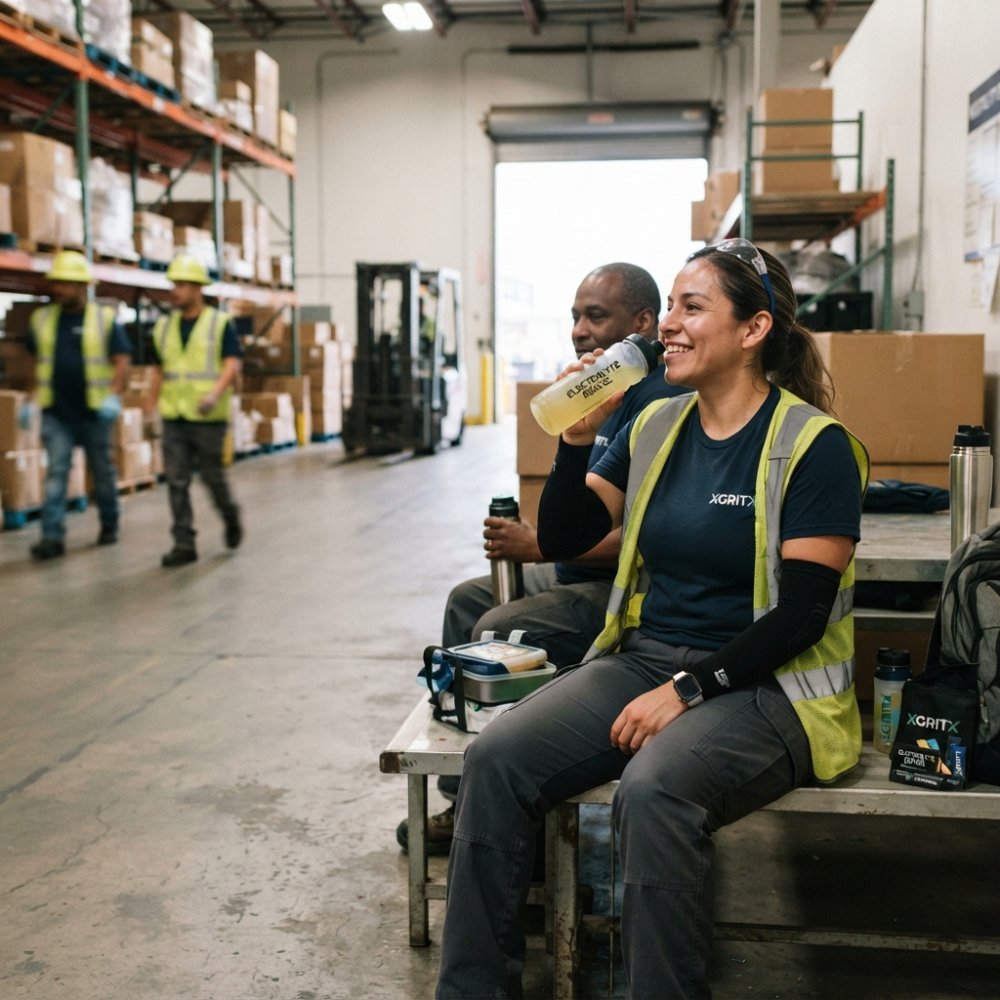
The foundation of any 12-hour shift recovery setup includes:
-
Hydration system - A 32-64 oz water bottle you can refill during your shift. Insulated bottles keep drinks at the right temperature for longer.
-
Electrolyte drinks or mix - Whether pre-made or powder you mix yourself, have it available during every shift. Look for options specifically dosed for 12-hour shifts, with clear labeling so you can see how they align with sustained labor demands rather than short workouts.
-
Compression gear - At minimum, compression socks or sleeves for your most-stressed area (usually legs for standing work). Quality matters here, cheap compression loses its effectiveness after a few washes.
-
Recovery supplements - A consistent product you take between shifts to support muscle recovery and sleep quality. This is where transparency becomes critical. Know exactly what dosages you're getting and why each ingredient is included.
-
Proper footwear and support - If you're standing all day, your shoes and insoles matter as much as any supplement. Worn-out footwear creates cascading problems up your entire body.
-
Break routine - Schedule 5-10 minute breaks every 2-3 hours where you sit, hydrate, and eat something with carbs and protein. This is gear you can't buy, but it's as important as everything else on this list.
The mistake most people make when building a recovery setup: they buy individual products without a coherent strategy. A compression sleeve helps, an electrolyte drink helps, a recovery supplement helps, but only if they're working together. The setup matters more than any single product.
| Recovery Gear Component | Primary Function | Best For | Testing Period |
|---|---|---|---|
| Electrolyte drinks | Maintain sodium and hydration during shift | Heat exposure, heavy sweating | 1 week |
| Compression gear | Improve blood flow, reduce leg/arm fatigue | Standing work, repetitive motion | 2 weeks |
| Recovery supplements | Support muscle repair and sleep between shifts | All shift types | 3-4 weeks |
| Proper footwear | Reduce foot and leg strain | Standing or walking work | Ongoing |
| Hydration system | Consistent water access during shift | All shift types | 1 week |
Conclusion
Twelve-hour shifts demand recovery gear engineered for sustained performance, not short workouts. The difference between struggling through the final hours and finishing strong comes down to consistent hydration, proper electrolyte replacement, and recovery support between shifts.
SHOP COOLANT.
Frequently Asked Questions
What recovery gear is actually essential for a 12-hour shift?
Essential recovery gear includes hydration solutions with electrolytes, compression sleeves or socks to reduce swelling, and supplements formulated for sustained energy. The specific combination depends on your work type, warehouse workers benefit most from joint support and hydration, while healthcare staff prioritize cognitive clarity and sustained focus. Transparency in ingredient sourcing matters; lab-tested products with published COAs ensure you know exactly what you're using throughout your shift.
How do electrolyte drinks actually help during heat exposure at work?
Electrolytes replace sodium, potassium, and magnesium lost through sweat, maintaining proper muscle function and preventing cramping. During heat exposure, your body loses fluids faster, and water alone doesn't restore electrolyte balance, this causes fatigue and reduced performance. Products dosed for 12-hour shifts maintain consistent hydration without crashes, keeping you sharp and physically stable from start to finish of your workday.
Can compression gear really reduce fatigue during standing all day?
Compression gear improves blood flow to working muscles and reduces swelling in feet and legs, which directly decreases fatigue during prolonged standing. By supporting muscles and reducing vibration during repetitive movement, compression sleeves and socks help you maintain performance throughout your shift. Combined with proper hydration and recovery supplements, compression gear is one of the most practical tools for managing the physical demands of 12-hour shifts.
Is it safe to use supplements during 12-hour shifts if I'm drug tested at work?
Yes, if you choose products that are fully transparent about ingredients and third-party tested. Products with published COAs (Certificates of Analysis) and no proprietary blends show exactly what's in them, eliminating hidden substances that could trigger a positive test. Always verify that supplements contain no banned substances for your specific workplace or industry, transparency in labeling is your assurance of safety.
How much does a complete recovery gear setup cost?
Pricing depends on the specific products you choose and quantity ordered. XGRITX offers free shipping on orders over $50, and many recovery products range from basic hydration solutions to more comprehensive gear packages. For current pricing and bundle options tailored to your specific shift demands, visit XGRITX to explore what fits your budget and work requirements.