 listicle
Order High Performance Workwear Online: 2026 Review
Table of Contents
- What Separates High Performance Workwear From Standard Gear
- How to Choose Workwear for 12-Hour Shifts
- XGRITX Workwear Reviewed: The Heavyweight Tee Line
- Benefits of Technical Fabrics in Construction Gear
- Comparing XGRITX Tees Side by Side
- Sizing and Fit for Different Body Types
- Sustainability and Manufacturing Transparency
- Frequently Asked Questions
Last Updated: September 19, 2026
What Separates High Performance Workwear From Standard Gear
High performance workwear is engineered for the physical demands of a job, not just a logo printed on a blank. The difference shows up in fabric weight, stitching, and how a garment holds its shape after fifty washes.
Here is what actually separates the two categories:
- Fabric weight: 6 oz and up holds shape; lightweight knits stretch out
- Stitching: Double-needle seams at the neck, sleeves, and hem prevent blowouts
- Collar construction: A reinforced collar stays flat; a thin one rolls after a month
- Shrink control: Pre-shrunk or garment-dyed fabric keeps its size
How to Choose Workwear for 12-Hour Shifts
Choosing workwear for 12-hour shifts comes down to three things: fabric weight, seam construction, and fit that allows full range of motion. Get those right and you stop thinking about your shirt by hour eight.
Fabric Weight and Stitching That Survive Repeated Washes
Fabric weight is the best predictor of how a tee ages: heavier cotton takes longer to break down and keeps a smoother print surface. Look for double-needle stitching at stress points, single stitching at the neckline fails first, and shoulder-to-shoulder neck tape. Garment-dyed fabric is dyed after sewing, so it feels broken-in from day one, which is why XGRITX uses it across much of the line.
Fit Checks Before You Add to Cart
Measure a shirt you already like, then compare those numbers to the size chart. Width is measured flat across the chest, not around your body. Three checks before you buy:
- Compare chest width flat against a shirt that fits you well
- Check the length against your torso, not your height
- Note the drop shoulder if you plan to layer
XGRITX Workwear Reviewed: The Heavyweight Tee Line
XGRITX workwear centers on heavyweight cotton tees built for long shifts, with fabric weights of 6.1 oz and 7.5 oz. The graphics speak to specific trades rather than generic "hard work" slogans.
Earned Not Given Respect T-Shirt: 7.5 oz Cotton Built for Long Days
The Earned Not Given Respect T-Shirt is the heaviest tee in the lineup at 7.5 oz, made from 100% cotton. At $34.23, it carries a substantial feel most gym tees do not. Construction matters more than the slogan: shoulder-to-shoulder neck tape, double-needle stitching at the neck, sleeves, and hem, a stretch-proof 1-inch collar, and a quarter-turned cut that eliminates the center crease.

Eat Sleep Drop Loads Repeat T-Shirt: Garment-Dyed Comfort for Truckers
For anyone behind the wheel, the Eat Sleep Drop Loads Repeat T-Shirt leans into the reality of the job, with distressed type that reads like a bumper sticker you would actually want. It is 6.1 oz ring-spun cotton, garment-dyed after construction for a soft, lived-in feel, with a tubular knit that has no side seams to reduce twisting in the wash.

Pallet Jack Certified and Forklift Certified Barely: Warehouse Floor Humor That Holds Up
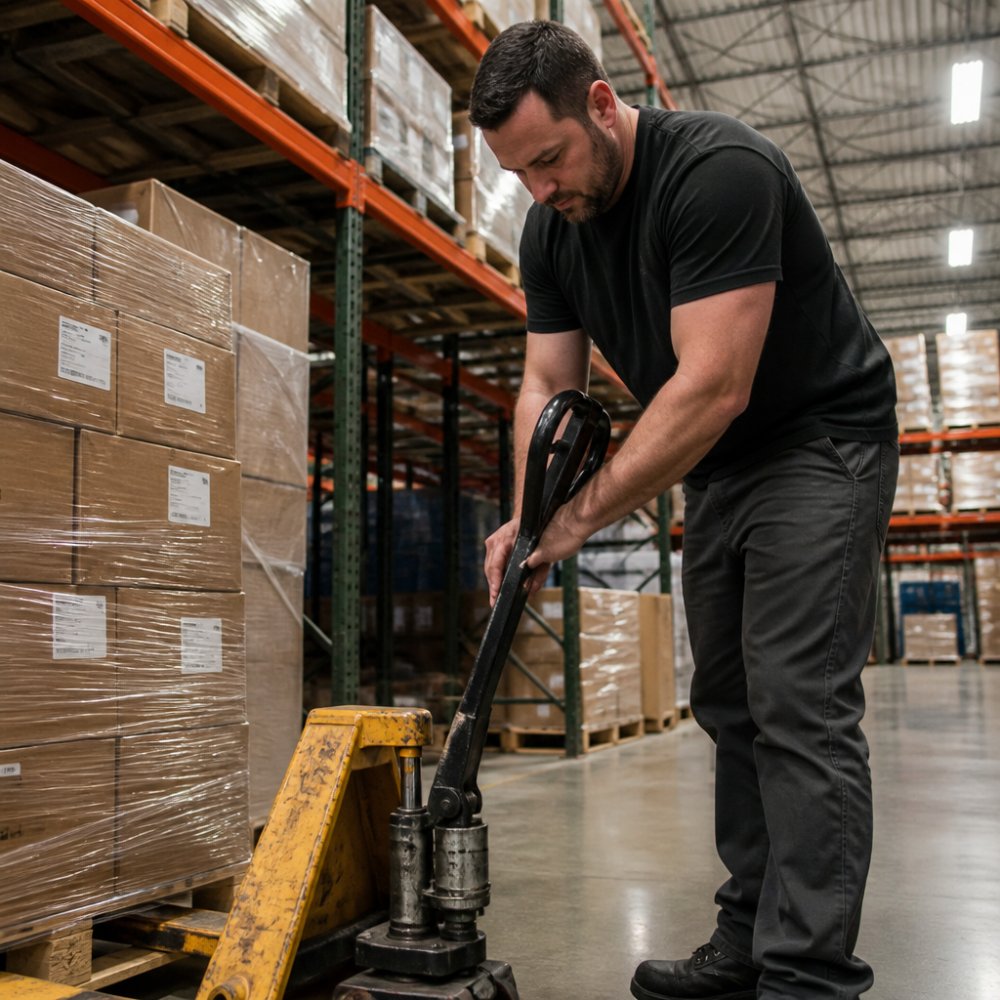
Two shirts target warehouse crews directly. The Pallet Jack Certified T-Shirt gives the everyday workhorse its due, while the Forklift Certified Barely T-Shirt leans on the joke every operator knows. Both use the same 6.1 oz garment-dyed cotton build as the trucker tee and run $33.99. The Forklift Certified Barely comes in Black, Blue Spruce, and True Navy; the Pallet Jack version is Black only.

Benefits of Technical Fabrics in Construction Gear
Technical fabrics in construction gear solve problems plain cotton cannot: moisture management, abrasion resistance, heat handling, and how a garment interacts with the safety standards a jobsite enforces. Cotton absorbs sweat and holds it, which is miserable on a site in July; technical blends move moisture to the surface where it evaporates. Abrasion resistance matters where you brush against scaffolding, concrete, and equipment all day, and ring-spun cotton with a tight knit resists pilling better than open-weave fabric.
Where Standards and Compliance Come In
A garment may also need to satisfy a written standard before it can be worn on certain sites.
- High-visibility apparel: ANSI/ISEA 107 classifies high-visibility safety apparel into Performance Classes (Class 1, 2, and 3) based on the amount and placement of retroreflective and background material. If a site requires Class 2 or Class 3, a plain cotton tee will not qualify.
- Flame-resistant (FR) clothing: NFPA 2112 covers flame-resistant garments used in industrial settings, and NFPA 70E addresses arc-rated clothing for electrical work. FR and arc-rated garments are tested and labeled, untreated cotton can ignite and continue to burn.
- Head protection: ANSI/ISEA Z89.1 covers industrial head protection and defines Type and Class ratings, which matters when choosing a base layer that will sit under a hard hat or bump cap.
- Eye and face protection: ANSI/ISEA Z87.1 sets the performance requirements for safety eyewear, relevant when picking a shirt with a collar that will not interfere with a face shield.
- Footwear: ASTM F2413 is the standard specification for protective (safety) toe cap footwear. If your employer requires safety-toe boots, the label inside the boot will reference this standard.
- Hazard communication and heat: OSHA's Hazard Communication Standard (29 CFR 1910.1200) governs how chemical hazards are communicated to workers, and OSHA's heat illness prevention guidance explains why moisture management and breathable fabric matter in hot environments.
What This Means When You Order
The practical takeaway is that "high performance" is not one thing. A performance tee that manages sweat is not the same product as a Class 2 high-visibility vest or an arc-rated FR shirt, and no single garment covers every standard. Before you order, ask three questions:
Earned Not Given Respect T-Shirt →
- Does the site have a written PPE policy that names a standard (ANSI/ISEA 107, NFPA 2112, ASTM F2413)?
- Does the garment need to be labeled or certified, or is it worn under other PPE?
- Does the fabric need to be FR, or is a non-FR base layer acceptable under an FR outer layer?
Comparing XGRITX Tees Side by Side
Comparing the XGRITX tee line side by side makes the choice straightforward. Fabric weight, price, and intended trade separate the options cleanly.
| Shirt | Fabric Weight | Price | Sizes | Best For |
|---|---|---|---|---|
| Earned Not Given Respect | 7.5 oz cotton | $34.23 | S-7XL | Gym, general labor, layering |
| Eat Sleep Drop Loads Repeat | 6.1 oz garment-dyed | $33.99 | S-4XL | Truckers, drivers, hot environments |
| Pallet Jack Certified | 6.1 oz garment-dyed | $33.99 | S-4XL | Warehouse, shipping, receiving |
| Forklift Certified Barely | 6.1 oz garment-dyed | $33.99 | S-4XL | Forklift operators, warehouse humor |
| Scanner Beeps So I Don't Have To | 6.1 oz garment-dyed | $34.87 | S-4XL | Pickers, packers, inventory |
Sizing and Fit for Different Body Types
Sizing for different body types starts with measuring a shirt you already own, not guessing from your usual letter size. XGRITX publishes flat-lay measurements for every tee, but measurements alone do not tell you whether a shirt will work for the way you move on the job, the part that drives returns. The 6.1 oz garment-dyed tees (Comfort Colors 1717 blanks) run with a relaxed unisex fit and room through the body:
| Size | Width (in) | Length (in) |
|---|---|---|
| S | 18.25 | 26.62 |
| M | 20.25 | 28.00 |
| L | 22.00 | 29.37 |
| XL | 24.00 | 30.75 |
| 2XL | 26.00 | 31.62 |
| 3XL | 27.75 | 32.50 |
| 4XL | 29.75 | 33.50 |
How to Measure for the Way You Actually Move
Width is measured flat across the chest, not around your body. Here is a repeatable method:
- Lay a shirt you already like flat on a table and smooth out the wrinkles.
- Measure armpit to armpit for chest width, and collar seam to hem for length.
- Compare those numbers to the size chart, not to your usual letter size.
- Note the drop shoulder if you plan to layer.
Fit by Trade: Why the Same Size Fits Differently
A shirt that fits a welder is not the same shirt that fits an electrician, even at the same body size, because of movement pattern.
- Electricians and overhead work: Reaching overhead pulls a shirt up at the waist and tight across the back. A longer body length (the 7.5 oz line runs 2 to 3 inches longer than the 6.1 oz options) keeps the hem from riding up, and a drop shoulder reduces pull across the chest.
- Welders and fabricators: Bending forward or crouching shortens the front of the torso and stretches the back. Extra room through the body, the relaxed unisex cut on the 6.1 oz tees, prevents binding across the shoulders. If the site requires FR, the base layer sits under an FR outer garment, so fit matters twice.
- Carpenters and framers: Constant bending, lifting, and twisting stresses the hem and side seams. A tubular knit with no side seams (like the 6.1 oz garment-dyed tees) reduces twisting in the wash, and double-needle stitching at the hem keeps it from blowing out.
- Truckers and drivers: Long hours seated compress the back and bunch fabric at the waist. A slightly shorter body length and softer garment-dyed cotton reduce chafing against a seat back, and the 6.1 oz weight breathes better in a hot cab.
- Warehouse and material handling: Constant reaching, bending, and pivoting means you want room through the chest and shoulders without excess fabric that can catch on equipment. The 6.1 oz relaxed cut is the safer choice; the 7.5 oz oversized cut is better for stationary or layering use.
Layering and Climate Control
Fit changes the moment you add a layer: a base layer that fits well on its own can feel tight under a hoodie, and an oversized shirt can bunch under outerwear.
- Cold environments: Size to your base layer, not your outer layer. A snug shirt under a jacket traps warm air better than a loose one, and a longer body length prevents gaps at the waist when you bend.
- Hot environments: Size for airflow. A relaxed cut with a lighter weight (6.1 oz) moves air and evaporates sweat faster than a heavyweight tee that clings.
- Transitional weather: The drop shoulder on the 7.5 oz line gives extra room without pulling, making it the better choice when layering under a light jacket in the morning and shedding it by afternoon.
Three Fit Notes That Matter
- Broad shoulders: The drop shoulder on the 7.5 oz line gives extra room without pulling.
- Long torso: The 7.5 oz tees run 2 to 3 inches longer than the 6.1 oz options.
- Between sizes: Size up for a looser look, size down for a standard fit on the oversized cuts.
Nursing staff should note the OR Nurse and Peds Nurse tees use the 7.5 oz oversized cut, while the Night Shift tee uses the same heavyweight build in Black only.
Sustainability and Manufacturing Transparency
Manufacturing transparency means knowing what is in the garment and where it came from. For workwear, that starts with the cotton source and the dye process. The 6.1 oz garment-dyed tees use 100% ring-spun cotton, and the Eat Sleep Drop Loads Repeat tee is made in Honduras. The 7.5 oz line uses cotton sourced domestically, with Black in 100% cotton and Charcoal Grey in a cotton-polyester blend.
Frequently Asked Questions
What features define high performance workwear?
High performance workwear starts with fabric weight and construction. The XGRITX heavyweight tees use 6.1 to 7.5 oz cotton with double-needle stitching at the neck, sleeves, and hem. That stitching pattern resists blowouts at stress points. Shoulder-to-shoulder neck tape keeps the collar from stretching. Pre-shrunk or quarter-turned construction limits shrinkage after washing. Look for these specs before you order high performance workwear online.
How do I choose the right size when ordering workwear online?
Measure a shirt you already own and compare it to the garment measurements on the product page. XGRITX lists flat-lay chest width and body length for every size. The Pallet Jack Certified tee runs from 18.25 inches wide at Small to 29.75 inches at 4XL. If you want a looser fit, size up. Supplier tolerances run about 1.5 inches, so check the size chart before adding to cart.
Are there specific workwear brands designed for durability and mobility?
XGRITX builds its tees around shift-length durability. The 7.5 oz Shaka Wear heavyweight fabric used in the OR Nurse and Peds Nurse tees holds its structure through repeated washes. The 6.1 oz Comfort Colors tees use tubular knit construction with no side seams, which reduces twisting and seam failure. Both weights include reinforced collars and shoulder seams that hold up to daily wear in warehouse, construction, and healthcare settings.
What are the benefits of moisture-wicking fabrics in work clothing?
Moisture-wicking fabric moves sweat away from your skin to the outer surface where it evaporates faster. For workers in hot warehouses or outdoor construction sites, that means less chafing and fewer wet-shirt chills when you step into air conditioning. Cotton alone absorbs and holds moisture, so look for blends or performance treatments if sweat management is your priority. The heavyweight cotton tees work best as a base layer in moderate conditions.
Is high performance workwear worth the investment for contractors?
A $34 tee that holds its shape for two years costs less per wear than a $12 shirt you replace every three months. XGRITX tees use reinforced stitching, stretch-proof collars, and pre-shrunk cotton that survives repeated washing. The Work Guarantee includes a 60-day refund policy, so you can test the fit and durability on your own job site. Free shipping applies on orders over $50.