 comparison
Vital4U Alternative for Construction Professionals
Table of Contents
- Why Construction Professionals Need a Vital4U Alternative
- The Hidden Cost of Proprietary Blends on the Job Site
- What to Look for in a Vital4U Alternative: 7 Non-Negotiables
- XGRITX: Built for 12-Hour Shifts, Not 60-Minute Workouts
- Is Intermittent Fasting Good for Shift Workers on Construction Sites?
- Best Supplements for 12 Hour Shifts: A Comparison Table
- Performance Nutrition for Manual Labor: What Actually Works
- Safety, Cost, and the Bottom Line for Daily Use
- Frequently Asked Questions
Last Updated: October 4, 2026
Why Construction Professionals Need a Vital4U Alternative
If you work 10 to 12 hour shifts on a job site, a supplement built for a 60-minute gym session is the wrong tool for the job.
The math is simple. A gym athlete takes a pre-workout, trains hard for an hour, and recovers. A construction professional pours concrete, climbs scaffolding, and swings a hammer for eight to twelve hours in extreme heat. Your body needs different fuel: steady energy, real hydration, and joint support that lasts past lunch.
Most Vital4U alternatives fail because they copy the gym formula. Below, we break down what actually matters for a construction professional looking for a vital4u alternative, including a full comparison table, a cost-benefit breakdown, and the seven things you should never compromise on.
The Hidden Cost of Proprietary Blends on the Job Site
A proprietary blend is a label that lists ingredients without disclosing how much of each is inside. That matters on a job site because you cannot tell whether you are getting a clinical dose of an active ingredient or a sprinkle of it. For a construction professional, this is not a labeling quibble. It is a safety issue.
When you do not know the dose, you cannot predict the effect. You might get a crash at hour six, or jitters that make operating equipment risky. According to FDA guidance on dietary supplement labeling, manufacturers are required to list ingredients but proprietary blends let them hide individual amounts. That is a problem when your livelihood depends on staying sharp.
The fix is transparency: full disclosure of every ingredient and its dose, plus a certificate of analysis (COA) for each batch. If a brand will not show you the numbers, move on.
What to Look for in a Vital4U Alternative: 7 Non-Negotiables
A vital4u alternative worth switching to must meet seven criteria before it earns a spot in your truck or lunchbox:
- Full dose transparency - every ingredient listed with its exact amount, no proprietary blends
- Drug-test safe - no banned substances that could flag a workplace screen
- Sustained energy, not a spike - formulated for hours of work, not a 60-minute rush
- Electrolyte balance - sodium, potassium, and magnesium for hydration in heat
- Joint and muscle recovery support - ingredients that address the wear of repetitive labor
- Batch-verified testing - a published COA you can actually read
- Cost per working day - the real measure of value, not the sticker price
Miss any one of these and you are back to guessing. The seventh point is the one most buyers ignore, and it is often the one that decides whether a product is worth it.
XGRITX: Built for 12-Hour Shifts, Not 60-Minute Workouts
XGRITX is the vital4u alternative we built specifically for people who work long shifts in demanding conditions. Every product is dosed for a 10 to 12 hour workday, not a gym session, and every batch is lab-tested with published COAs so you can verify what you are taking.
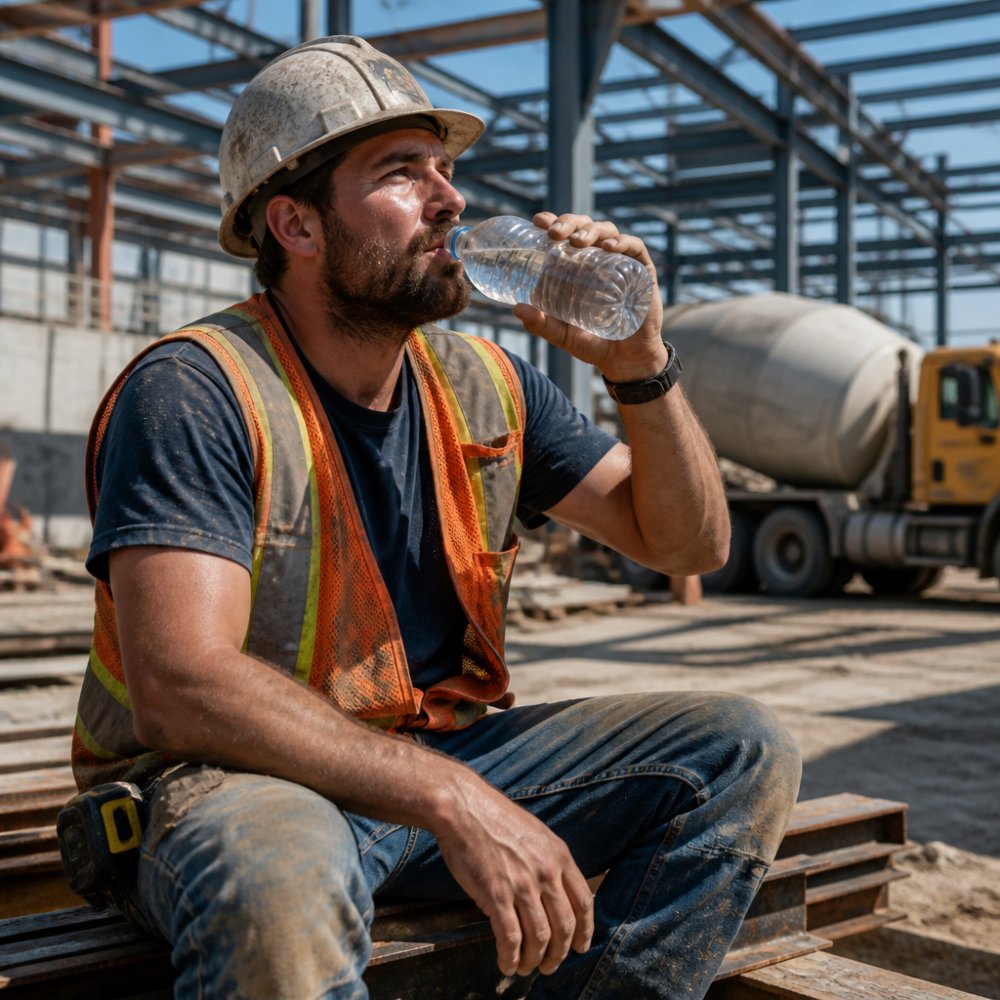
The lineup covers the three things that break down over a long shift: hydration, energy, and recovery. Here is what sets it apart.
Hydration and Electrolyte Balance for Extreme Heat Environments
Working in extreme heat drains electrolytes fast. When sodium and potassium drop, you get cramps, fog, and a dangerous drop in focus. XGRITX hydration products are built around electrolyte balance rather than sugar, so you replenish what you sweat out without a sugar crash an hour later.
Drug-Test Safe Energy Without the Crash
Energy drinks spike and crash. For a construction professional who gets tested regularly, that is a double problem: the crash hits mid-shift, and some stimulants carry risk on a screen. XGRITX formulas are built to be drug-test safe and to deliver steady energy across the shift instead of a short peak. If you are coming from a gym-style pre-workout, expect a gentler curve and no jittery edge.
Is Intermittent Fasting Good for Shift Workers on Construction Sites?
For most construction professionals, intermittent fasting is a poor fit for a 12-hour shift. The reason is timing, not willpower. A fasting window that works for an office worker with a predictable schedule collides with the physical demands and irregular hours of a job site.
When you skip fuel on a day of heavy labor, you run down glycogen and blood sugar, which shows up as fatigue, poor focus, and slower reaction time. Research on shift work and circadian disruption shows irregular schedules already strain the body's energy regulation, so adding a fasting window on top often makes it worse.
That said, fasting is not automatically wrong. Some workers do fine if they shift their eating window to match their shift and prioritize nutrient density in the meals they do eat. The practical rule: if fasting leaves you foggy or shaky on the job, it is not working, regardless of what the internet says.
Best Supplements for 12 Hour Shifts: A Comparison Table
The best supplements for 12 hour shifts deliver sustained energy, hydration, and recovery support without proprietary blends or drug-test risk. But the table most buyers need is not a feature grid.
Here is how the leading approaches stack up when you run the math on a per-shift basis.
| Option | Built For | Typical Caffeine Per Serving | Transparency | Drug-Test Safe | Cost Per Working Day |
|---|---|---|---|---|---|
| XGRITX | 10-12 hour shifts | Moderate, sustained-release | Full doses, published COAs | Yes | Varies by product and bundle |
| Gym pre-workout | 60-minute sessions | Often 200-350 mg | Often proprietary blends | Varies | Low per scoop, but dosed for 1 hour |
| Energy drinks | Quick stimulant hit | 80-300 mg per can | Undisclosed blends | Varies | $2-$4 per can, 1-2 cans per shift |
| Coffee | Caffeine only | 95 mg per 8 oz cup | Known | Yes | Low, but zero hydration or recovery |
| Electrolyte powders | Hydration only | None | Varies | Usually | Low, but no energy or recovery |
Three things stand out when you read this table like a construction professional instead of a gym rat.
First, the caffeine math. A single energy drink plus a morning coffee can put you past 300 mg before lunch.
Second, the cost-per-shift reality. A $3 energy drink twice a day is roughly $120 to $150 a month.
Third, the hydration gap. Coffee and energy drinks are diuretics. Electrolyte powders hydrate but do not fuel. Only a product built for the full shift covers all three jobs: energy, hydration, and recovery.
If you want the full breakdown of what to look for before you compare brands, the seven non-negotiables above are the checklist to run every option through.
Performance Nutrition for Manual Labor: What Actually Works
Performance nutrition for manual labor is not the same as sports nutrition. A marathon runner burns roughly 100 calories per mile over a few hours.
Here is the framework we recommend, built around the realities of a job site rather than a training plan.
Before the shift (first 60 minutes awake): protein and complex carbs for a slow-release base, plus 16 to 20 ounces of fluids.
During the shift (every 2 to 3 hours): electrolytes and steady caffeine, not a single big hit. Sodium, potassium, and magnesium replace what you sweat out.
After the shift (within 2 hours): protein and hydration to start recovery before you sleep. Recovery is not a luxury for a construction professional.
All day: nutrient density over empty calories. A long shift burns more than most workers realize, and a gas-station lunch does not replace it.
There is a workplace-safety dimension here that most nutrition content ignores. Employers under OSHA workplace safety standards have a duty to protect workers from heat and fatigue hazards, and hydration is a core part of that duty.
Safety, Cost, and the Bottom Line for Daily Use
Safety and cost are the two factors that decide whether a supplement earns a permanent spot in your routine. On safety, the standard is simple: every ingredient disclosed, every batch tested, and nothing that risks a workplace drug screen. That protects your job as much as your health.
Cost deserves a closer look than most buyers give it. The real number is cost per working day, not the price on the bottle. A cheaper product you have to double up on costs more than a properly dosed one. When you compare daily-use products, divide the price by the number of shifts it covers and compare that figure.
There is also a compliance angle. Employers under OSHA workplace safety standards have a duty to protect workers from heat and fatigue hazards. A worker who stays hydrated and focused is a safer worker, and that is a benefit no energy drink delivers.
Frequently Asked Questions
What are the best energy supplements for construction workers?
The best options prioritize sustained energy and hydration over quick stimulant hits. Look for formulas with B vitamins, electrolytes like sodium and potassium, and ingredients such as citrulline and taurine that support blood flow and endurance. A Vital4U alternative like XGRITX is dosed for 10-12 hour shifts, uses no proprietary blends, and publishes lab-tested COAs for every batch, so you know exactly what you are taking.
How do I maintain energy levels during a 12-hour construction shift?
Steady nutrition and hydration matter more than caffeine spikes. Start with a protein-rich meal, drink water with electrolytes throughout the day, and use a supplement that supports sustained energy rather than a sudden rush. Performance nutrition for manual labor should include carbs for fuel, electrolytes for sweat loss, and ingredients that help with muscle recovery. Avoid relying on energy drinks that lead to a crash two hours later.
Are proprietary blends safe for daily use in high-intensity jobs?
Proprietary blends hide individual ingredient doses, so you cannot verify whether amounts are effective or safe for daily use. For construction professionals who take supplements every workday, transparency matters. Choose products that list every ingredient and dose on the label, publish third-party lab results, and avoid stimulant overload. XGRITX eliminates proprietary blends entirely and batch-tests every product.
What ingredients should construction professionals look for in a supplement?
Prioritize electrolytes (sodium, potassium, magnesium) for hydration, B vitamins for energy metabolism, vitamin D and zinc for immune support, and citrulline or taurine for blood flow and endurance. Probiotics can help with digestion during irregular meal schedules. Avoid mega-dose caffeine and unknown stimulants. For a Vital4U alternative, check that the label shows exact doses and that the brand publishes certificates of analysis.
Is intermittent fasting effective for construction workers?
Intermittent fasting can work for some shift workers, but construction professionals doing heavy physical labor in heat face higher risks of dehydration, low blood sugar, and fatigue. If you try it, shift your eating window to include a substantial meal before and after work, and increase electrolyte intake. Many workers find smaller, frequent meals plus a hydration-focused supplement plan better supports sustained energy on the job site.
Construction work punishes guesswork. The right supplement for a 12-hour shift is one dosed for the shift, fully transparent, and safe for a drug screen. XGRITX was built for exactly that: lab-tested every batch with published COAs, no proprietary blends, and formulas dosed for 10 to 12 hour days. Our Work Guarantee backs every order with a 60-day refund policy, and shipping is free over $50. Get started with XGRITX and stay sharp, hydrated, and recovered from clock-in to clock-out.